Do crosswords and brain games keep your mind in shape?
Your daily crossword makes you better at crosswords. Does it help the rest of your thinking? What the research shows, and how to mix up your challenges.
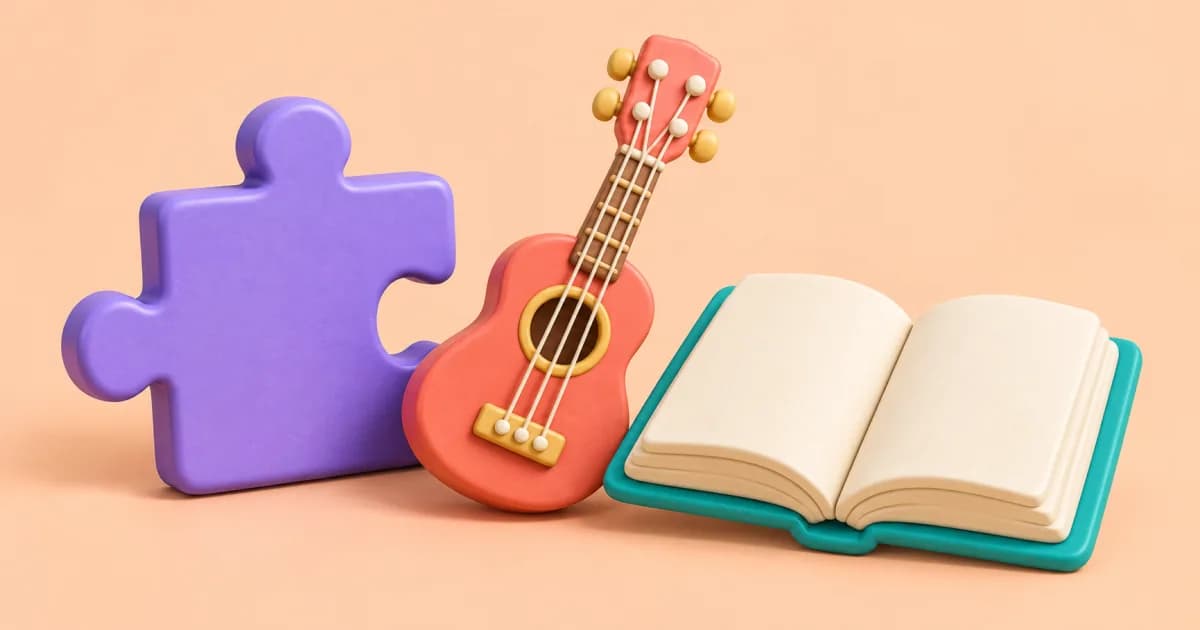
Keep your morning crossword. It is good practice for crosswords, and enjoying it is a perfectly good reason to do it. If you are counting on it to keep the rest of your mind in shape, though, spread your bets. The research finds only small gains beyond the puzzle itself, so treat the crossword as one challenge among several, and make room for learning something new.
Will you get better at the puzzle?
Yes. Practice makes you better at the task you practise; the gain on other tasks is small, and the evidence for it is disputed. If you are weighing up a brain-training app, read what the big reviews of brain training found first.
Does it help the rest of your thinking?
A little, on tests. A 2024 review pooled 55 trials of cognitive training in older adults, from computer tasks to pencil-and-paper exercises. People who trained did slightly better on thinking tests than people who did not. The review covered only short-term results, so it cannot say whether the gain lasts, and there is still no clear sign that daily life gets easier.
Why keep learning, then?
Because what you learn is real. Six months of guitar lessons leave you able to play the guitar, whatever they do for your memory test.
Learning also has the backing of the World Health Organization. Its 2026 guidance recommends cognitive training and mental stimulation for adults whose memory and thinking are normal or only mildly affected. Plenty of learning happens in company, too: a language class, a choir, a cooking course.
When is forgetfulness worth checking?
Everyone forgets a name now and then. Some signs are different, and worth taking to a doctor: asking the same questions over and over, getting lost in familiar places, struggling to follow a recipe or directions, or becoming confused about time, people or places. If you notice these in yourself or someone close, book an appointment.
How do you mix it up?
Think of puzzles as one item on a longer list. Most of the other items are new skills, where you start out clumsy and slowly improve. Keep a puzzle or two in the mix if you enjoy them; freegama has free grid and number puzzles you can play in your browser, with no account.
Let the crossword be one of several things you are learning, and let at least one of them be something you are still bad at.
Sources
- Do Brain-Training Programs Work? — Simons and colleagues, Psychological Science in the Public Interest (2016)
- Effects of engagement, persistence and adherence on cognitive training outcomes in older adults, a systematic review and meta-analysis — Li and colleagues, Age and Ageing (2024)
- New WHO guidelines on dementia risk, news release — World Health Organization (2026)
- 6 Ways To Improve Your Brain Health — Cleveland Clinic (2025)
- Memory Problems, Forgetfulness, and Aging — US National Institute on Aging
Related articles

For families
Does what you eat change your memory?
What a three-year trial of the MIND diet found, what the WHO says about vitamin pills, and the simple foods worth building meals around.
Read article
For families
How the AAP's family media plan starts a conversation
What the AAP's 2024 paper says about its Family Media Plan, with questions families can discuss and clear limits on the evidence.
Read article