
Flip Pairs
A free paired-associate learning game: flip picture tiles, remember where each one sits, and use those locations to find every matching pair.
About this game
Flip Pairs practises visual memory through pairs matching. You learn a connection between a picture and its place on the table. We group this under paired-associate learning: remembering two things together. Diamond describes working memory as holding information in mind; here, that includes where pictures are. Related card-pair studies also ask players to remember locations. You discover the board yourself, and matching pictures stay visible while you search for the remaining pairs.
Clearing a whole board is what counts toward your scores in this game. The result combines your clear rate with the difficulty you settle at as the boards adapt. You must stay within the flip allowance and any deadline. Saving flips helps you finish, but adds no separate points. Compare your board results with earlier runs in your age band. Finding these pairs says nothing about memory in other activities.
How to play
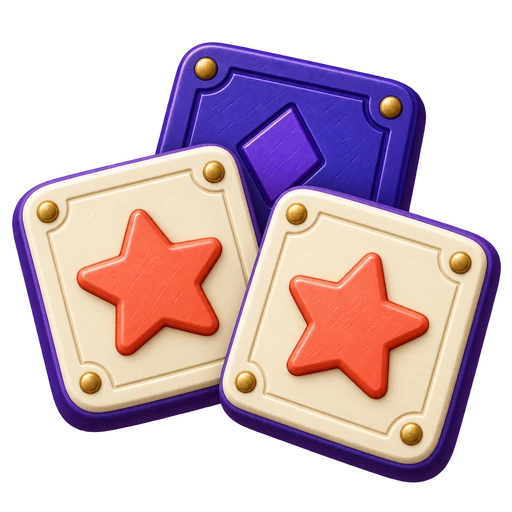
- Flip one tile, then a second tile, to compare their pictures.
- Matching pairs stay face up; different pictures turn face down again.
- Remember both locations after a mismatch and look for a picture’s twin.
- Find every pair before using up the board’s allowed flips.
Tips
- Give each picture a short name and connect it to a row or corner.
- When a familiar picture appears, choose its remembered partner before exploring another tile.
- Look at both pictures after a mismatch; that turn can help you find two later pairs.
How it adapts
Each age band has a level ceiling, and successful clears move the challenge up within that limit. Boards grow from five to ten pairs, and from level three they have time limits.
Questions
What is paired-associate learning?
It means learning a connection between two things. In Flip Pairs, those things are a picture and its location. Remembering that connection lets you find a matching picture without reopening every tile.
Is Flip Pairs untimed?
Levels one and two have no board deadline, though each board still limits your flips. From level three, boards have time limits. The run contains a limited set of boards and can finish between them.
Can kids play this pairs matching game?
Yes. The Kids band has a lower level ceiling, which limits board size. The tutorial shows a match and a mismatch before scored play, so children can learn the controls by using them.
The research behind it
Thevenot and colleagues studied remembering digit locations in a card-pairs task with 25 adults. Their reveal order and number cards differ from Flip Pairs. Diamond supplies the working memory framework. Neither source establishes benefits from playing these boards.