
Walkback
Watch stones light up along a path, then tap them forward or backward as the words tell you.
Memory · All ages
Watch the stones, then tap them forward or backward as shown.
About this game
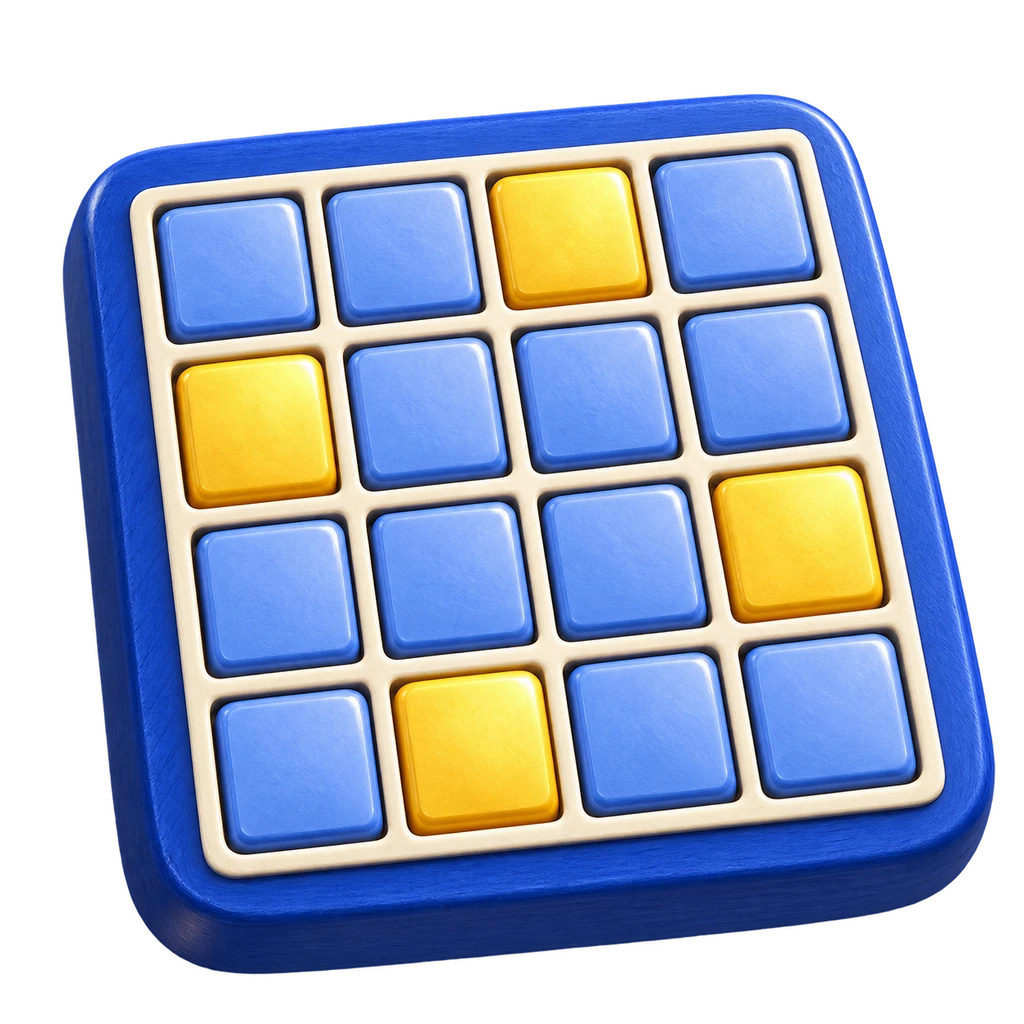
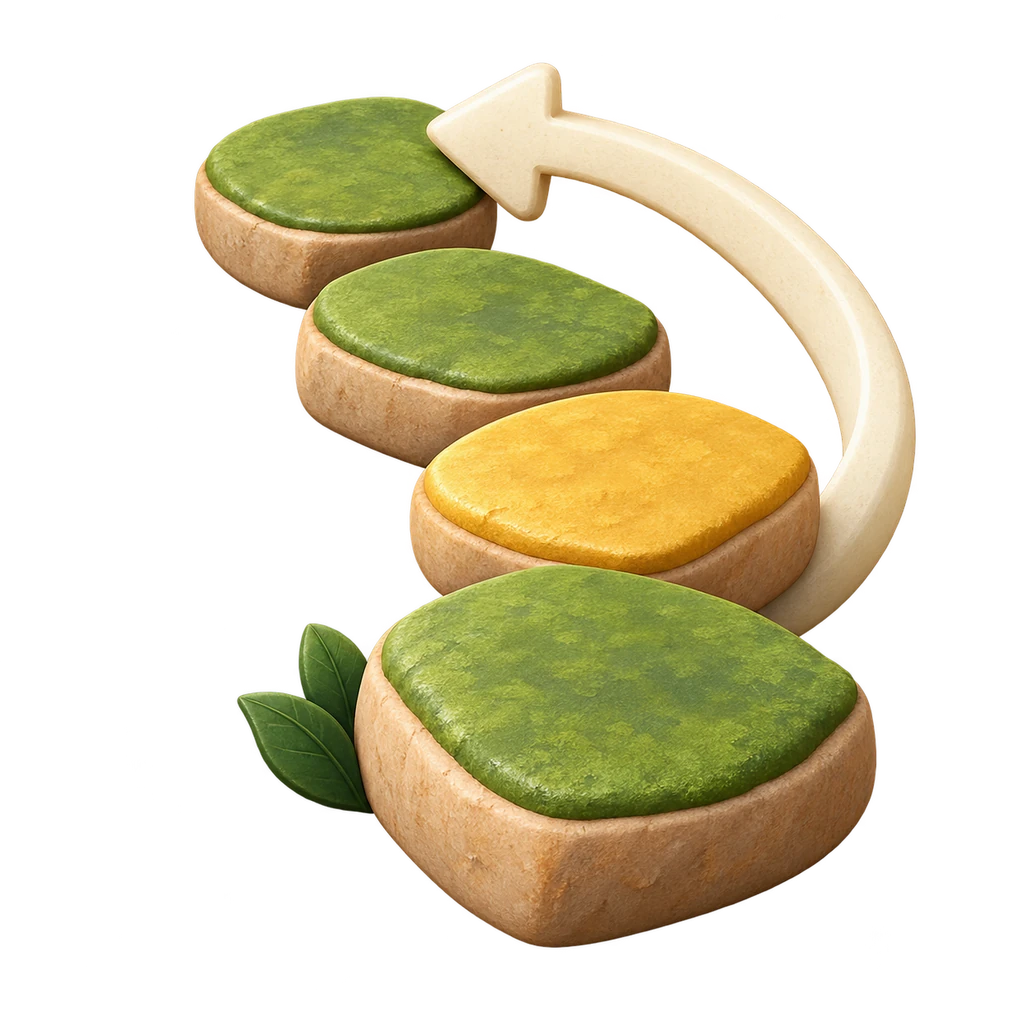
Walkback is a path-memory game. Stones in a garden light up in sequence, and you tap them back in the same order, or in reverse when the instruction says so.
It is inspired by the Corsi block-tapping task, a classic test of visuospatial short-term memory. Reversing the order adds a twist: you have to hold the path in mind and manipulate it, which puts more demand on working memory than simply repeating it.
How to play
- Watch the stones light up one after another.
- Read whether to tap them forward or backward.
- Tap the stones in that order. The paths get longer as you improve.
Tips
- Picture the path as a shape or a route rather than a list of positions.
- For backward rounds, replay the path in your head from the end.
- Read the direction before you start tapping.
How it adapts
Kids get shorter paths. Teens and adults get longer paths and more backward rounds. The path length adjusts to how you play.
Questions
What is the Corsi task?
It is a classic memory test in which a sequence of blocks is tapped and you repeat the sequence. It is used to study visuospatial memory.
Is backward really harder?
For most people it feels harder, because you have to hold the path and reverse it. The gap between forward and backward varies between people.
Why is the garden irregular?
So the pattern is not a simple grid. It makes each path more distinctive and harder to guess.
The research behind it
The Corsi block-tapping task has been used since the 1970s to study visuospatial working memory. Practice improves performance on the task itself; we report your scores in this game and make no promise about everyday memory.